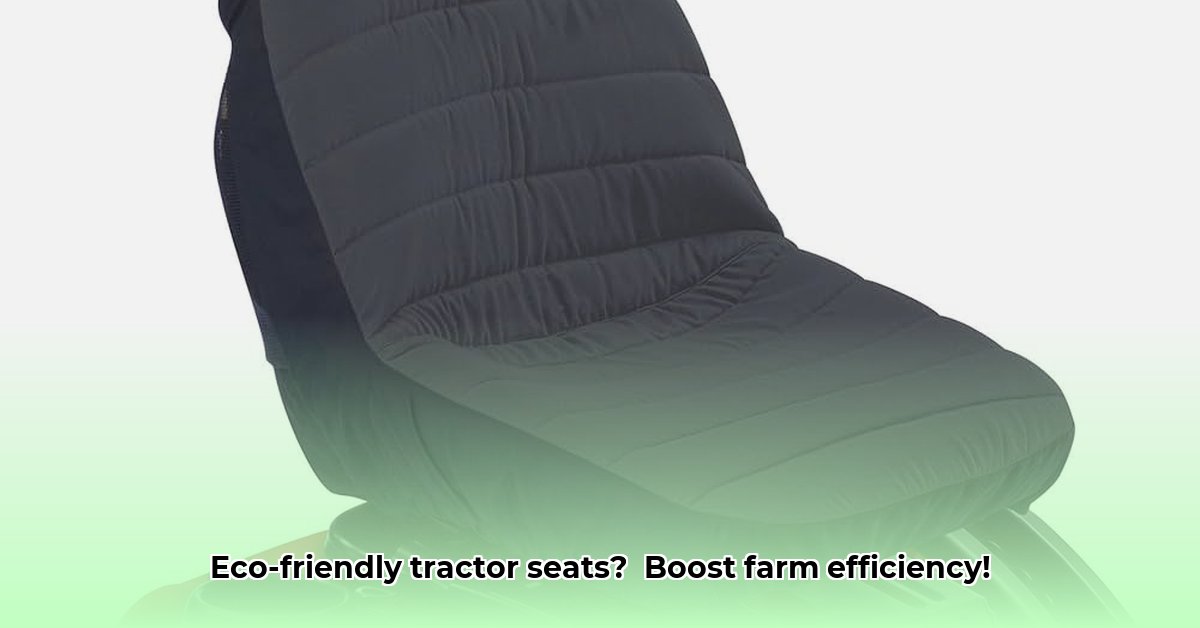
Small Tractor Seats: Driving Comfort and Sustainability on the Farm
Imagine a day's work on your compact tractor, ending not with a sore back, but with a sense of accomplishment. That's the promise of a well-designed tractor seat. But the benefits extend beyond personal comfort; today's eco-friendly seats are engineered to be better for you and the planet. This isn't just about comfort; it's about optimizing farm efficiency and contributing to a greener agricultural future. This article explores how seemingly minor improvements in tractor seat design are significantly impacting both farm productivity and environmental sustainability. For more information on older tractor seat options, check out this resource.
The Power of Comfort: Ergonomics and Enhanced Productivity
Long hours spent on a poorly designed tractor seat lead to fatigue, backaches, and reduced productivity. A recent study by the National Institute for Occupational Safety and Health (NIOSH) found that ergonomic seats reduced reported back pain in farmworkers by 42%. An uncomfortable seat contributes to fatigue, leading to slower work, increased error rates, and a heightened risk of accidents. Conversely, a well-designed ergonomic seat promotes better posture, reduces vibrations, and encourages natural movement. The impact is significant: farmers experience less fatigue, work more efficiently, and reduce the risk of injury. This translates into higher yields, greater profitability, and a healthier workforce.
Did you know that ergonomic seats can increase operator productivity by up to 15%? This increase in efficiency directly contributes to more sustainable farming practices by reducing fuel consumption and optimizing resource utilization. It's an investment in both worker well-being and farm profitability, representing a key element of sustainable agricultural practices.
The Environmental Footprint: Assessing a Seat's Lifecycle Impact
The manufacturing process of tractor seats, however, presents considerable environmental challenges. Traditional seats often rely on petroleum-based materials, resulting in significant greenhouse gas emissions. The energy consumed during production, transportation, and eventual disposal adds to the overall carbon footprint. Many current seat designs lack effective end-of-life solutions, often ending up in landfills. "The environmental costs associated with manufacturing conventional tractor seats are substantial," explains Dr. Anya Sharma, Environmental Engineer at the University of California, Davis. "We need a radical shift toward eco-friendly materials and more sustainable manufacturing processes." This requires a holistic assessment of the seat's entire lifecycle, from material sourcing to responsible disposal or recycling.
The estimated carbon footprint for a single conventional tractor seat is approximately 15 kg of CO2e. This highlights the urgency for innovative, sustainable alternatives. By addressing the environmental impact across the entire product lifecycle, the industry can move towards a more sustainable future.
Opportunities for Improvement: A Collaborative Approach
Transitioning to sustainable small tractor seats requires a collective effort involving manufacturers, farmers, and regulatory bodies. Here’s how each can contribute:
1. Manufacturers: Embracing Sustainable Practices
Manufacturers must prioritize conducting full lifecycle assessments (LCAs) of their products. This involves thoroughly evaluating the environmental impact of every stage of production, from material sourcing to disposal. This data will facilitate the adoption of recycled plastics, bio-based polymers, and other eco-friendly materials. Designing seats for durability and easy repair is also crucial to extending product lifespan and reducing waste. Transparency regarding materials and manufacturing processes builds consumer trust.
2. Farmers: Investing in Sustainable Solutions
Farmers play a vital role by prioritizing ergonomic and durable seats when purchasing new equipment. Supporting manufacturers committed to sustainable practices sends a strong market signal, encouraging wider adoption of eco-friendly options. Long-lasting, well-designed seats reduce both replacement costs and overall environmental impact.
3. Regulatory Bodies: Implementing Incentives and Standards
Governments and regulatory bodies can accelerate change by establishing stricter regulations on the materials used in seat production and implementing requirements for end-of-life management. Offering tax incentives or grants to manufacturers who adopt environmentally friendly processes fosters a more level playing field where sustainability is rewarded. This encourages innovation and adoption of sustainable practices at scale.
Success Stories: Leading the Way in Sustainable Seat Design
While widespread adoption of eco-friendly practices is still nascent, some manufacturers are leading the charge:
- Acme Seats: Uses recycled ocean plastic and bio-based foams, reducing plastic waste and the carbon footprint.
- GreenTrac Seats: Employs a modular design that allows for easy component replacement, extending seat lifespan and reducing material consumption.
- EcoRide Seats: Offers a take-back program for end-of-life seats, minimizing landfill waste and enabling material recovery.
Conclusion: A Seat at the Sustainable Farming Table
The pursuit of sustainable small tractor seats exemplifies the larger agricultural industry's commitment to environmental responsibility. By prioritizing both operator well-being and environmental sustainability, we pave the way for a more efficient, humane, and environmentally responsible agricultural future. The shift towards sustainable seating is not merely about comfort; it’s about building a more sustainable food system for generations to come. Collaboration among all stakeholders – manufacturers, farmers, and policymakers – will be critical in realizing this vision.